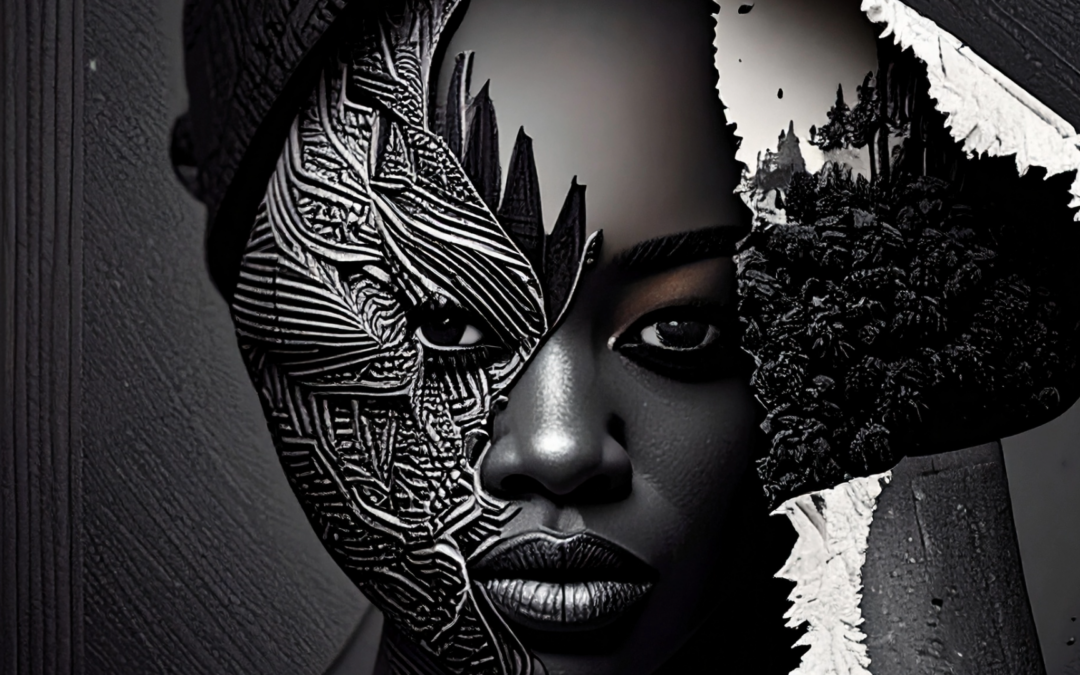
There's a reason they tried to take our names.
During the transatlantic slave trade, one of the first things that happened to enslaved Africans upon arrival in the Americas was the removal of their names. Their given names — names that carried meaning, lineage, spiritual identity — were replaced with European names chosen by enslavers. The message was clear: who you were before this moment does not matter. Your history begins with us.
It was a lie, of course. But it was an effective one. Because when you sever people from their names, you sever them from their stories. And when you sever them from their stories, you make it that much harder for the generations that follow to know where they come from.
This is why Njila's tagline is "Memory is Survival." Because for Black Americans, the act of remembering has never been neutral. It has always been resistance.
The Architecture of Erasure
Historical erasure doesn't happen all at once. It happens in layers. Each generation that passes without the stories being told makes the next generation's recovery that much harder.
First there was the deliberate destruction: names taken, families separated, oral traditions disrupted, African spiritual practices forbidden. Then came the institutional erasure: the exclusion of Black history from school curricula, the underinvestment in Black cultural institutions, the framing of American history as if it began with European settlement.
Today, we're watching a new chapter of this same pattern. Book bans. Restrictions on what teachers can say about race in the classroom. Public debates about whether acknowledging systemic racism is itself a form of harm. The tools are different, but the goal is familiar: control the narrative by controlling who gets to be remembered.
Why Personal Preservation Matters
In the face of institutional erasure, personal and community-level preservation becomes essential. We cannot wait for institutions to decide our stories are worth telling. We have to tell them ourselves.
This is why family genealogy is so much more than a hobby. When a Black family traces their lineage back through census records and courthouse documents and oral histories, they are doing the work that history refused to do for them. They are saying: we were here, we mattered, and we will not be forgotten.
It's why oral history is so much more than storytelling. When a grandmother sits with her grandchild and tells them about the family's migration north, or the church that held the community together, or the recipe that came from a great-great-aunt nobody talks about anymore — she is performing an act of cultural preservation as important as anything in any museum.
And it's why spaces like Njila exist. Not because one website can undo centuries of erasure. But because every story preserved, every ancestor named, every family history documented is a brick in the wall against forgetting.
How You Can Resist Through Remembering
Record the elders.
If you have living family members with stories to tell, record them. Video. Audio. Written transcription. Whatever format you have access to. Do it now. Do not wait. These voices are irreplaceable, and every day we lose elders is a day we lose living libraries.
Digitize your family's documents.
Scan the photographs. Photograph the documents. Create digital copies of everything physical. Natural disasters, fires, and simple deterioration claim family artifacts every year. A digital backup ensures the materials survive.
Contribute to community archives.
Share your family's story with organizations dedicated to preserving Black history. Njila's Archive welcomes community submissions. Local historical societies, university archives, and organizations like the Smithsonian's National Museum of African American History and Culture also collect family stories.
Teach the children.
The most powerful form of preservation is generational transmission. Tell the children the stories. Show them the photographs. Take them to the places that matter. Help them understand that they carry a history worth knowing — even when the textbooks leave it out.
Speak the names.
This is the simplest and most powerful act of ancestral preservation: say their names aloud. At family gatherings, at ancestor tables, in prayer, in conversation. Every time you speak an ancestor's name, you pull them out of the silence and back into the world of the living.
Memory as Foundation
I started this piece by talking about names — the ones that were taken and the ones we're working to reclaim. I want to end there, too.
Because here's the truth that keeps me going: they didn't succeed. Despite everything — the Middle Passage, slavery, Jim Crow, ongoing systemic racism — we are still here. Our stories survived in songs, in recipes, in the way we walk and worship and love. They survived in fragments, yes. But fragments are enough to build on.
Memory is survival because it gives us something to build from. It tells us who we are, where we come from, and what we're made of. And that foundation — however incomplete, however imperfect — is stronger than any force that has ever tried to destroy it.
So remember. Remember fiercely, deliberately, and with the full knowledge that the act of remembering is itself a form of resistance.
The ancestors are counting on it.
Join the Njila community and add your voice to the Archive. Subscribe for weekly stories, practices, and ancestral wisdom.