
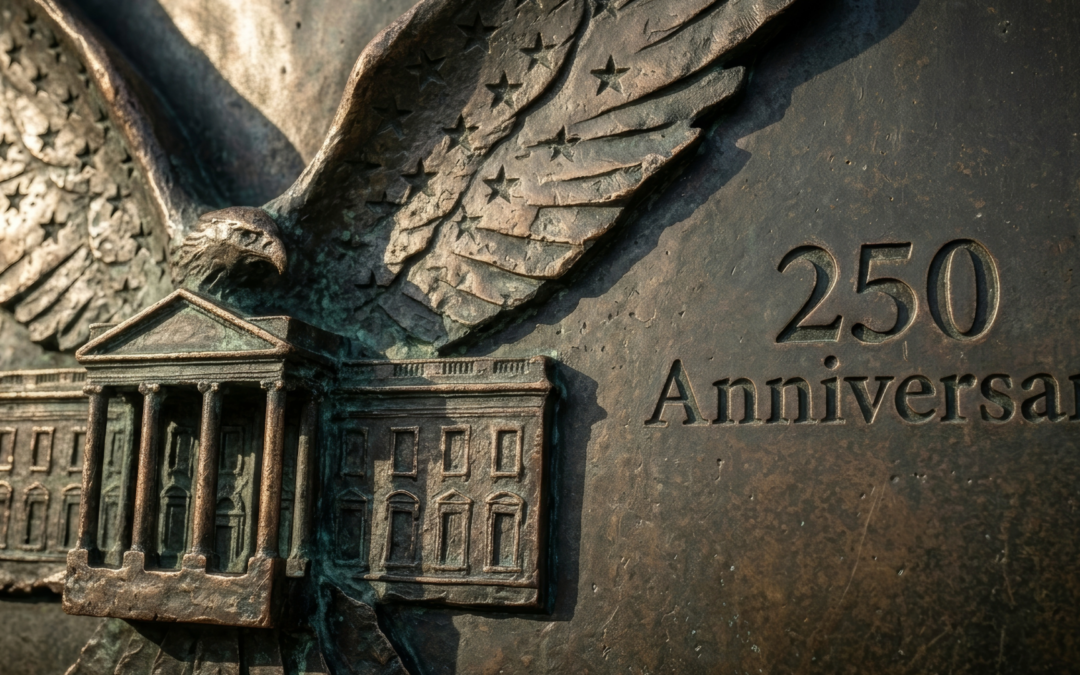
The country turns 250 this week. We are counting the same years, and we are counting them differently.
Our newest installation, The Record and the Silence, is live now. It reads 250 years of Black America as a running account: the firsts that were won and seated, set beside the years the record was forced to go quiet. You can walk it in about two minutes. It will stay with you longer than that.
Start with the number.
In 1790, when the first federal census was taken, 92 percent of Black Americans were held in slavery. About one in five people in the new United States was Black. Nearly all of them were owned as property. The installation renders that as one hundred marks, each a single percent of the Black population counted that year. Ninety-two of them are enslaved. Eight are free.
Then the number does not move.
For seventy years, across four generations, the share of Black Americans held in slavery barely shifted. It did not ease gradually. It did not soften into freedom. It held near nine in ten until it was ended by force of law and war, marked in the record by ratification of the Thirteenth Amendment in 1865.
That plateau is the first thing the installation asks you to sit with. Progress is not the natural drift of history. Where it came, it was fought for.
The firsts, and the filter.
The heart of the piece is the long reach of what came after: the first Black Americans seated in military command, in education, in civic office, in law, in business, and in culture, alongside the amendments that made those seats possible. You can filter the record by category and follow each thread on its own.
One rule governs every entry. Each date reflects when a person was seated, not merely elected or named. A first won on paper but blocked in practice is not the same as a first that was actually held, and the installation refuses to blur the two.
Now look at the silence.
Between Reconstruction and the modern era, the record goes quiet. That quiet is the reason this installation exists.
The silence is not an absence of Black ambition. It is the presence of a system that seated Black officeholders during Reconstruction, removed them, and then wrote them out of the record entirely. The gap you see is not people who did not try. It is people who were erased. The Silence Archive documents that erasure state by state; this installation is the national overview that sits atop it.
This is why we do not tell this story as a march toward an inevitable better day. Progress is real. So is erasure. Both are documented. To show one without the other is to lie by omission, and we are in the business of the opposite.
On method.
Population and enslavement figures come from the United States Census. Officeholder dates reflect when a person was seated. Where scholars differ on who holds a given first, we name the most commonly cited claim rather than pretending the debate is settled. Nothing in the installation is embellished. Nothing speculative is dressed up as fact. That discipline is not a limitation. It is the whole point. The record is powerful enough without decoration.
Why now.
Because the anniversary the country is marking this week is real, and so is what it left out. Two hundred and fifty years is long enough to hold both the firsts and the silences, and a memory worth keeping has to carry both.
The path remembers what the records forgot.
Walk The Record and the Silence here: njila.org/the-record-and-the-silence
Memory is Survival.
— B. Kelly